How to Make a Backyard Court More Kid-Friendly
A Sport Court® Guide for Safer, More Active Play at Home
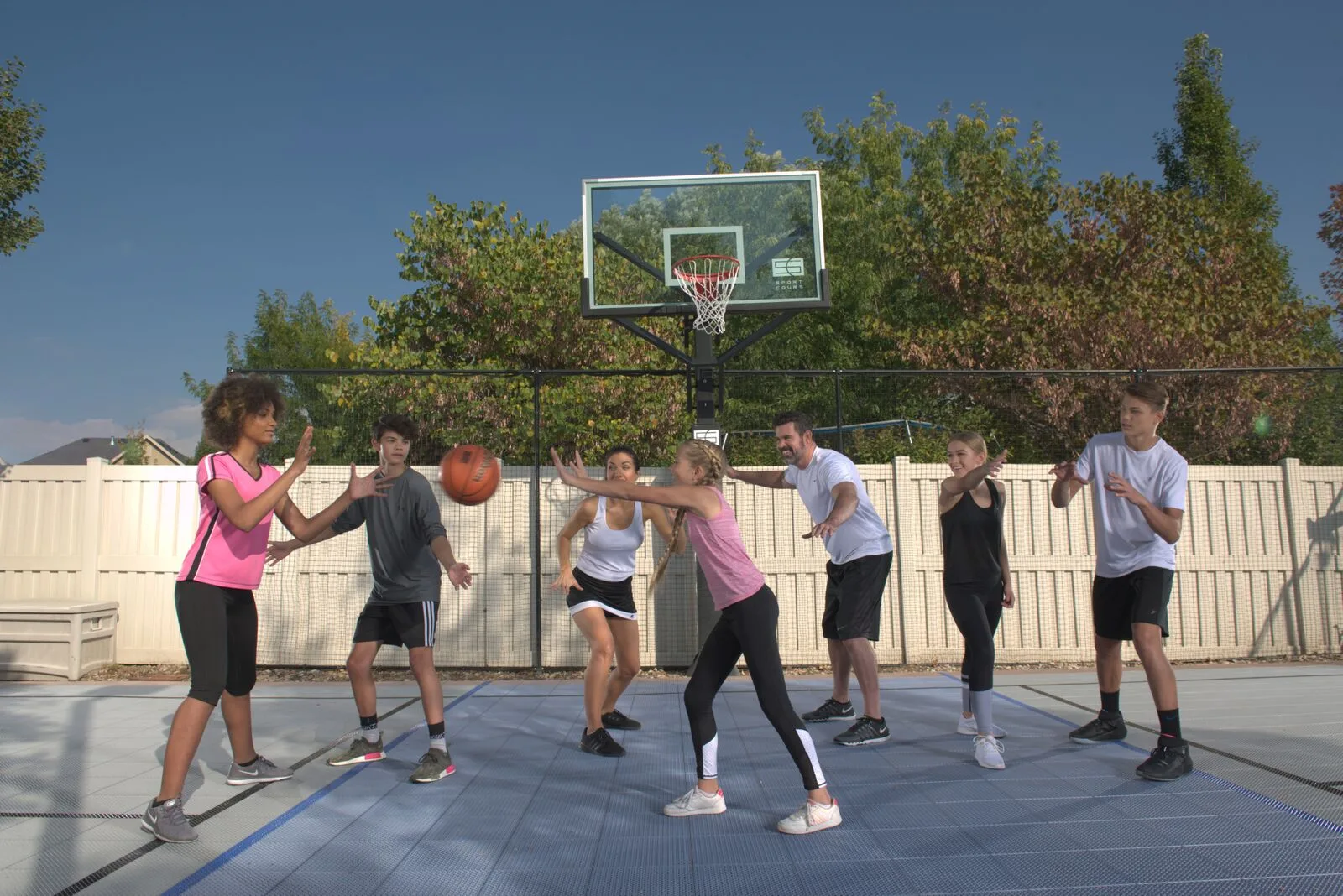
A backyard court should be more than a place to shoot hoops — it should be a space where kids feel confident, safe, and excited to play every day.
When designed correctly, a Sport Court® backyard court becomes a multi-sport, all-ages play surface that supports physical development, reduces injury risk, and grows with your family. Below, we break down how to make a backyard court truly kid-friendly, using guidance from trusted safety and health organizations — and showing how Sport Court is engineered to meet those needs.

1. Start with the right surface — safety comes first
For kids, falls aren’t an if — they’re a when. That’s why the most important element of a kid-friendly backyard court is the playing surface.
Why Sport Court matters for kids
Sport Court’s modular tile systems are designed to:
- Provide consistent traction to reduce slips
- Deliver shock absorption that’s easier on growing joints
- Drain water quickly, reducing slick surfaces after rain
- Create a flat, even surface that minimizes trip hazards
According to the Centers for Disease Control and Prevention (CDC), falls are one of the leading causes of non-fatal injuries for children, particularly during sports and recreational play. Choosing a surface that helps manage impact and traction is a key part of injury prevention.
Why this helps kids play longer:
A surface that feels comfortable underfoot encourages kids to keep moving — which supports the CDC’s recommendation that children get at least 60 minutes of physical activity per day.
2. Design for falls — not just performance
If your backyard court is near play equipment (like a swing set or climbing structure), safety design should extend beyond the court itself.
The U.S. Consumer Product Safety Commission (CPSC) recommends:
- Defined “use zones” around play equipment
- Impact-attenuating surfacing where falls are most likely
- Clear separation between play areas and hard or hazardous surfaces
A Sport Court installation allows builders to:
- Clearly define play zones with custom color layouts
- Create smooth transitions between court areas and surrounding spaces
- Reduce abrupt height changes that can cause trips or awkward falls
CourtBuilder insight:
Families often focus on the court surface itself — but injuries frequently occur just outside the play area. Smart court layout and transitions matter.
3. Right-size the hoop for growing athletes
One of the fastest ways to make a backyard court more kid-friendly is surprisingly simple: lower the hoop.
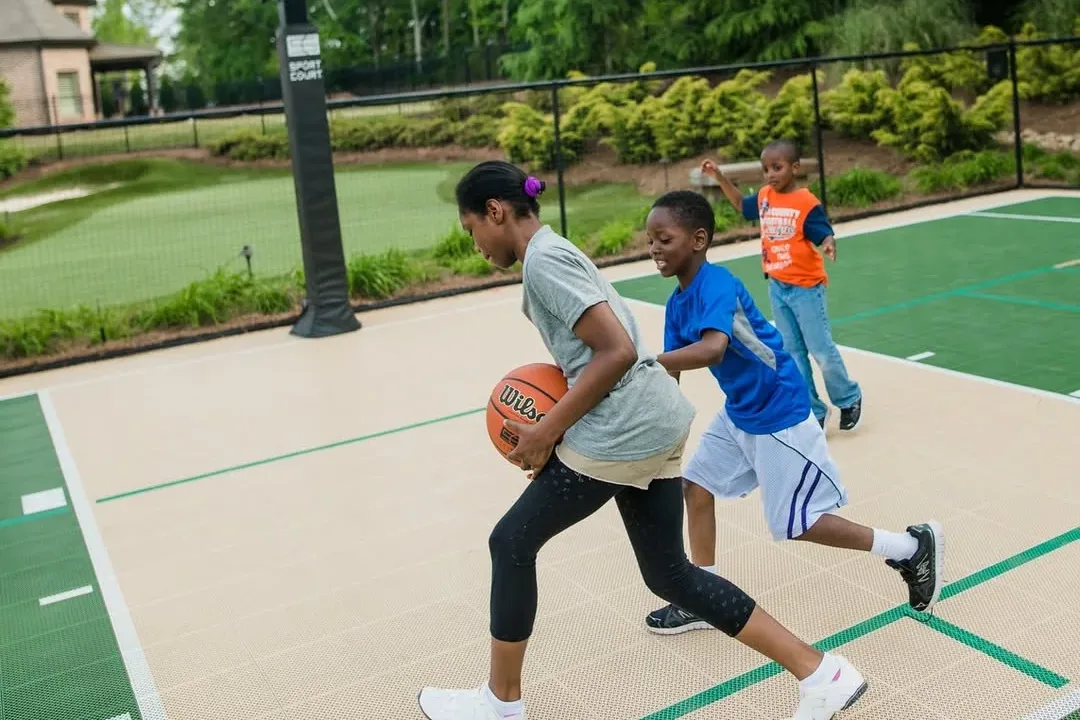
Sport Court backyard courts pair perfectly with adjustable basketball systems, allowing families to:
- Lower hoop height as kids learn fundamentals
- Raise it over time as strength and confidence grow
- Promote proper shooting mechanics and reduce strain
Why it matters:
Kids who experience early success are more likely to stay active — and less likely to develop poor form that can lead to overuse injuries.

4. Add multi-game markings to invite creativity
Kids don’t play one sport at a time — they invent games, change rules, and switch activities quickly. A kid-friendly backyard court should support that.
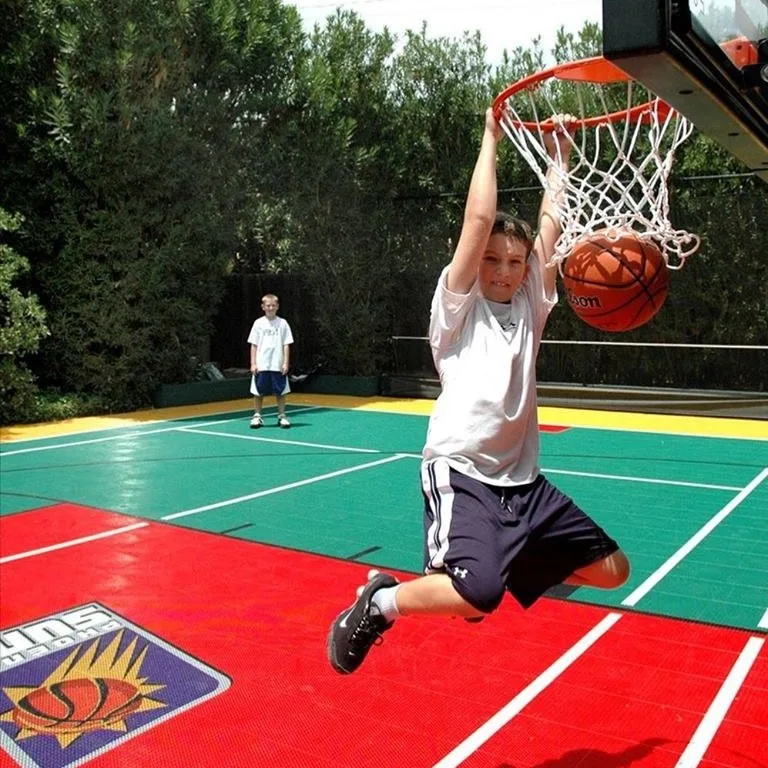
Sport Court’s custom line options make it easy to include:
- Short-court basketball lines for younger players
- Four-square and playground games
- Agility and movement zones for scooters, cones, and drills
- Multi-sport layouts for pickleball, volleyball, and futsal-style play
This versatility helps reduce burnout and keeps kids engaged — especially important as research shows variety improves long-term physical activity adherence.
5. Storage and simple rules reduce injuries
An organized court is a safer court.
Kid-friendly Sport Court setups often include:
- On-court or nearby storage for balls and equipment
- Simple posted rules (no hanging on rims, shoes required, water breaks encouraged)
- Clear sightlines for supervising adults
According to pediatric injury research, rule-setting combined with proper equipment significantly reduces preventable sports injuries.
Why Sport Court Is Built for Kids (and Parents)
A Sport Court backyard court isn’t just about play — it’s about confidence, safety, and longevity.
What makes Sport Court kid-friendly by design:
- Shock-absorbing modular tiles
- Consistent traction and drainage
- Custom layouts that grow with your family
- Proven performance in homes, schools, and communities worldwide
When kids feel safe and successful, they play more — and that’s where lifelong movement habits begin.
Kid-Friendly FAQ

-
1
What makes a backyard court kid-friendly?
A kid-friendly backyard court prioritizes shock absorption, traction, adjustable equipment, and multi-game layouts. Sport Court surfaces are designed to support safe falls, reduce fatigue, and encourage daily play.
-
2
What is the safest surface for kids to play basketball at home?
Surfaces with consistent traction, drainage, and some impact forgiveness — like modular Sport Court tiles — help reduce slip and fall injuries compared to bare concrete.
-
3
What height should a basketball hoop be for kids?
USA Basketball recommends 8 feet for ages 7–8 and 9 feet for ages 9–11, with adjustable systems allowing the hoop to grow with the child.