Why Your Court Surface Matters More Than You Think
Research Shows How Sport Court® Prime Play Helps Athletes Play Safer and Perform Better
When athletes think about improving performance, they usually focus on training harder, eating better, or upgrading their gear. But what if one of the biggest performance advantages is actually beneath their feet?
A study conducted at the University of Calgary Human Performance Lab found that court surface technology can have a significant impact on both athlete safety and performance. The research compared traditional concrete courts to Sport Court® PrimePlay™, analyzing how athletes moved, absorbed impact, and performed during common basketball movements such as sprinting, running, side shuffling, and sharp directional changes.
The results were impressive: athletes experienced lower impact forces, improved vibration absorption, greater comfort, and even trends toward faster sprint speeds when playing on PrimePlay.
The Hidden Problem with Concrete Courts
For decades, concrete has been the standard outdoor sports surface. It’s durable, affordable, and easy to maintain. But concrete has one major drawback: it doesn’t absorb impact.
Every sprint, jump, cut, and pivot generates force that travels through the feet and up the body. Over time, repeated exposure to these impacts can increase stress on muscles, joints, and lower back.
That’s why sports flooring technology has become such an important conversation in the world of basketball, pickleball, volleyball, and multi-sport facilities. More athletes, schools, parks, and homeowners are looking for ways to reduce impact while maintaining elite-level performance.
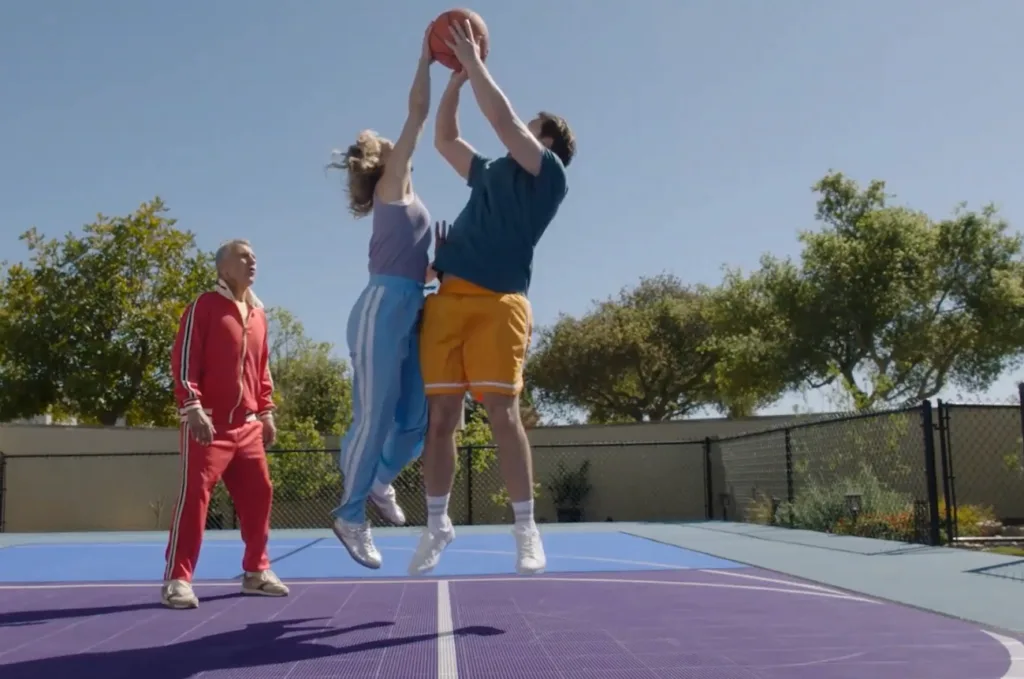
What the Study Found
Researchers used advanced Xsens motion capture technology and body-mounted sensors to capture 3D biomechanical data from male and female athletes. The goal was simple: compare how the body responds when playing on concrete versus Sport Court PrimePlay.
1. Reduced Impact on the Lower Back
One of the most significant findings involved the sacrum, a bone located at the base of the spine.
The study found that PrimePlay reduced sacrum vibration acceleration by 17% compared to concrete, suggesting enhanced cushioning and reduced shock transfer to the lower back.
For athletes who spend hours practicing, training, and competing, reducing repeated impact exposure can make a meaningful difference in overall comfort and long-term physical well-being.
2. Athletes Moved Faster
Everyone wants an edge, even if it’s small.
Researchers observed a 2% increase in sprinting speed on the Sport Court surface compared to concrete. While that may not sound dramatic, in sports where split-second reactions matter, even slight improvements can create a competitive advantage.
The combination of traction, stability, and energy return appears to create an environment where athletes can move confidently and aggressively.
3. Better Shock Absorption During Lateral Movements
Basketball, pickleball, tennis, and many other sports rely heavily on side-to-side movement.
During side shuffle testing, PrimePlay demonstrated improved vibration damping throughout several areas of the lower body:
- 30.1% improvement in vibration damping in the quadriceps
- 21.1% improvement in the calf
- 19.2% improvement in the tibia
- 14.4% positive trend in the hamstrings
In simple terms, the body was able to absorb and manage forces more effectively rather than allowing them to travel through muscles and joints.
Why Directional Changes Matter
Many athletic injuries occur when athletes rapidly change direction.
PrimePlay incorporates Sport Court’s patented Lateral Forgiveness™ technology, which allows slight movement between tiles to absorb transition forces generated during cuts and pivots.
When researchers evaluated 180-degree turning movements, they found:
23% improvement in vibration damping in the tibia
31% improvement in vibration damping in the calf [sportcourt.com]
These findings suggest that the surface helps the body handle demanding directional changes more efficiently than concrete.


Athletes Felt the Difference
The data told one story, but athlete feedback told another.
Participants consistently reported that the Sport Court PrimePlay surface felt:
- Softer
- More comfortable
- Better cushioned
- Higher in traction and grip
- Superior for overall athletic performance
In movements ranging from jumping and running to sprinting and side shuffling, athletes rated both traction and performance higher on PrimePlay than on concrete.
That’s important because confidence matters. When athletes trust their footing, they’re more likely to move naturally, react quickly, and perform at their highest level.
More Than Just Performance: A Safer Outdoor Sports Surface
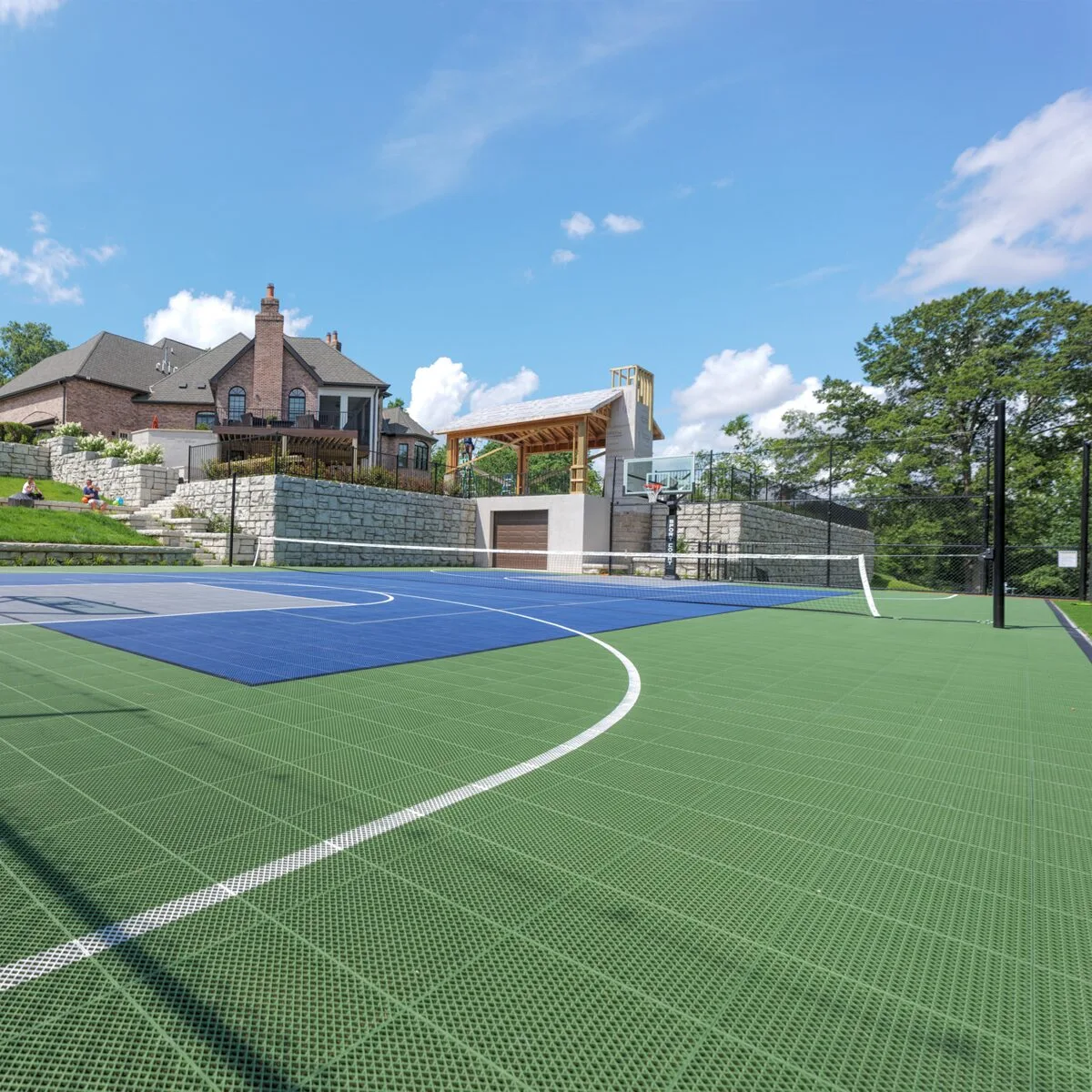
PrimePlay isn’t just designed for competitive athletes. It’s also an attractive option for families, schools, recreation centers, and sports facilities.
The surface features:
- High-performance traction
- 99% ball rebound performance
- WetTrax® technology for play after rain
- UV-resistant materials
- 100% recyclable construction
- A 15-year limited warranty
Whether you’re building a backyard basketball court, upgrading a community recreation facility, or designing a multi-sport athletic space, surface technology can play a major role in athlete experience and safety.
The Bottom Line
The research from the University of Calgary reinforces what many athletes already feel when they step onto a high-performance sports surface: the ground beneath you matters.
Compared to traditional concrete, Sport Court® PrimePlay™ demonstrated reduced impact forces, improved vibration absorption, enhanced traction, greater comfort, and even faster sprint performance trends.
For athletes looking to play harder, move faster, and reduce unnecessary impact on their bodies, the future of outdoor sports may not be about training differently. It may start with playing on a smarter surface.